

Hey there! As a supplier of plastic cup forming machines, I often get asked about the pressure control of these machines. So, I thought I'd take a few minutes to break it down for you.
First off, let's talk about why pressure control is so important in a plastic cup forming machine. You see, the right amount of pressure is crucial for creating high - quality plastic cups. If the pressure is too low, the plastic might not form properly, leading to cups that are thin in some areas, have poor shape retention, or even end up with holes. On the other hand, if the pressure is too high, it can cause the plastic to rupture or deform in an unwanted way, and it can also put a lot of stress on the machine itself, potentially leading to more wear and tear and breakdowns.
How Pressure is Generated in Plastic Cup Forming Machines
There are different ways to generate pressure in plastic cup forming machines. One common method is through hydraulic systems. In a Hydraulic Cup Forming Machine, hydraulic fluid is used to transfer force. The machine has a pump that pushes the hydraulic fluid into cylinders. As the fluid fills the cylinders, it causes pistons to move, and this movement generates the pressure needed to form the plastic into cups.
Another type is the Hydraulic Cup Making Machine. Similar to the hydraulic cup forming machine, it relies on the power of hydraulics. The advantage of hydraulic systems is that they can generate a large amount of force, which is great for forming thick - walled or large - sized plastic cups. They also offer good control over the pressure, allowing operators to adjust it according to the specific requirements of the plastic material and the cup design.
There are also mechanical systems in some plastic cup forming machines. These use gears, levers, and other mechanical components to generate and transfer force. Mechanical systems are often simpler and more straightforward, but they might not offer the same level of fine - tuned pressure control as hydraulic systems.
Factors Affecting Pressure Control
A bunch of factors can affect the pressure control in a plastic cup forming machine. The type of plastic material is one of the most important ones. Different plastics have different melting points, viscosities, and elasticities. For example, polypropylene (PP) and polyethylene (PE) have different properties. PP is a bit stiffer and has a higher melting point compared to PE. So, when forming cups from these materials, the machine needs to apply different pressures. If you're using a stiffer plastic, you'll generally need more pressure to shape it properly.
The thickness of the plastic sheet also matters. Thicker sheets require more pressure to form into cups. If you try to use the same pressure for a thin and a thick sheet, the thin sheet might get over - formed or damaged, while the thick sheet might not form correctly.
The design of the cup is another factor. Cups with complex shapes, like those with deep indentations or irregular edges, need more precise pressure control. The machine has to apply pressure evenly across the entire surface of the plastic sheet to ensure that the cup forms accurately.
Controlling Pressure in the Machine
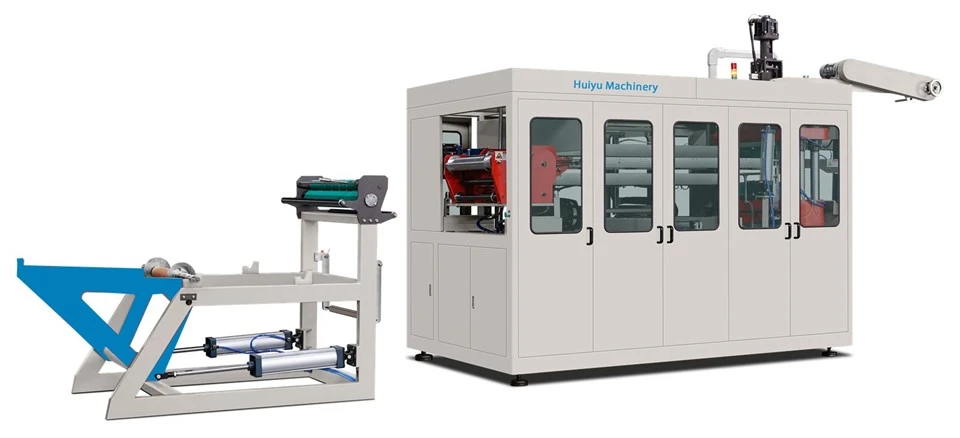
Modern plastic cup forming machines, like the Full - automatic Cup Thermoforming Machine, come with advanced pressure control systems. These systems use sensors to monitor the pressure inside the machine. The sensors send signals to a control unit, which can then adjust the pressure as needed.
For example, if the sensor detects that the pressure is too low, the control unit can increase the flow of hydraulic fluid in a hydraulic system or adjust the mechanical components in a mechanical system to boost the pressure. Conversely, if the pressure is too high, it can reduce the force being applied.
Some machines also have programmable pressure settings. This means that operators can input the specific pressure requirements for different types of cups and plastic materials. The machine will then automatically adjust the pressure during the forming process, which saves time and reduces the chance of human error.
Benefits of Good Pressure Control
Having good pressure control in a plastic cup forming machine brings a whole bunch of benefits. First of all, it ensures high - quality cup production. Cups formed with the right pressure have consistent wall thickness, good shape, and strong structural integrity. This means they're less likely to leak or break during use, which is great for both the manufacturer and the end - user.

It also improves the efficiency of the machine. When the pressure is well - controlled, the machine can operate at its optimal level. There's less downtime due to rework or machine breakdowns caused by improper pressure. This leads to higher production rates and lower production costs in the long run.
Another benefit is that it extends the lifespan of the machine. Excessive pressure can cause wear and tear on the machine's components, such as the molds, cylinders, and pistons. By maintaining the right pressure, these components are less likely to get damaged, and the machine will last longer.
Troubleshooting Pressure - Related Issues
Even with advanced pressure control systems, problems can still occur. One common issue is inconsistent pressure. This might be due to a leak in the hydraulic system if it's a hydraulic machine. A small leak can cause the pressure to drop suddenly or fluctuate during the forming process. To fix this, you'll need to find and repair the leak. This could involve replacing a damaged seal or tightening a loose connection.
Another problem could be incorrect pressure settings. If the operator inputs the wrong pressure values, the cups won't form correctly. In this case, it's a matter of double - checking the settings and making the necessary adjustments.
Sometimes, the pressure control system itself might malfunction. The sensors could be giving inaccurate readings, or the control unit might have a software glitch. If you suspect a problem with the system, it's best to consult the machine's manual or contact the manufacturer's technical support team for assistance.
Conclusion
In conclusion, pressure control is a vital aspect of plastic cup forming machines. It affects the quality of the cups, the efficiency of the machine, and its lifespan. As a supplier, we understand the importance of providing machines with reliable pressure control systems. Our Hydraulic Cup Forming Machine, Hydraulic Cup Making Machine, and Full - automatic Cup Thermoforming Machine are designed to offer precise pressure control, ensuring that you can produce high - quality plastic cups with ease.
If you're in the market for a plastic cup forming machine or want to learn more about how our machines' pressure control systems work, don't hesitate to reach out. We're here to help you make the right choice for your business. Whether you're a small - scale producer or a large - scale manufacturer, we've got the perfect machine for you. Let's start a conversation and see how we can meet your plastic cup production needs.
References
- "Plastic Processing Technology" by John Doe.
- "Hydraulic Systems in Industrial Machinery" by Jane Smith.
- Manufacturer's manuals for plastic cup forming machines.


