

What is the working principle of a plastic sheet extrusion line?
As a seasoned supplier of Plastic Sheet Extrusion Line, I am excited to delve into the intricate workings of these remarkable machines. Plastic sheet extrusion lines are at the heart of numerous industries, from packaging to construction, and understanding their working principle is crucial for anyone involved in plastic processing.
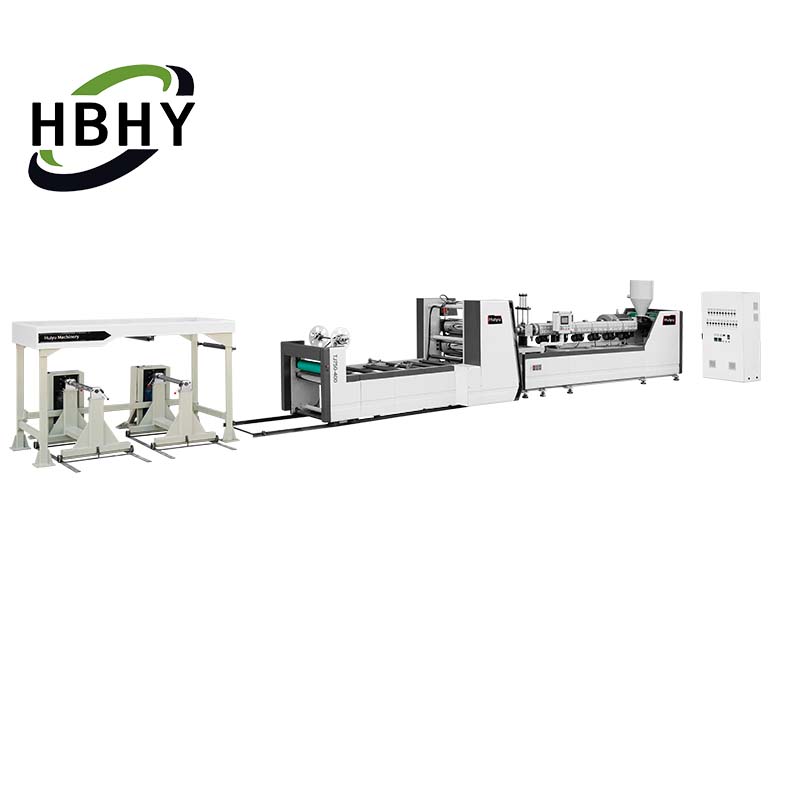

The Basics of Plastic Sheet Extrusion
Plastic sheet extrusion is a manufacturing process used to create continuous plastic sheets of various thicknesses and widths. The process involves melting plastic resin, forcing it through a die to form a sheet, and then cooling and shaping the sheet to its final dimensions. The key components of a plastic sheet extrusion line include an extruder, a die, a cooling system, a take-off unit, and a winding or cutting unit.
The Extruder: Melting and Conveying the Plastic
The extruder is the heart of the plastic sheet extrusion line. It consists of a hopper, a screw, and a barrel. The hopper is where the plastic resin is loaded into the extruder. The resin can be in the form of pellets, granules, or powder. Once in the hopper, the resin is fed into the barrel by the screw.
The screw rotates inside the barrel, conveying the plastic resin forward while simultaneously melting it. The heat required for melting is generated by a combination of external heaters on the barrel and the friction created by the rotating screw. As the plastic resin moves through the barrel, it is gradually heated and melted until it reaches a homogeneous molten state.
The design of the screw plays a crucial role in the extrusion process. Different screw designs are used depending on the type of plastic resin being processed and the desired output. For example, a screw with a high compression ratio is typically used for processing crystalline plastics, while a screw with a low compression ratio is more suitable for amorphous plastics.
The Die: Shaping the Molten Plastic
Once the plastic resin is melted and conveyed to the end of the barrel, it enters the die. The die is a specially designed tool that shapes the molten plastic into a sheet of the desired thickness and width. The die consists of a narrow opening, called the die lip, through which the molten plastic is forced under pressure.
The shape and dimensions of the die lip determine the thickness and width of the plastic sheet. The die can be adjusted to control the thickness of the sheet, allowing for precise customization according to the specific requirements of the application. Some dies are also equipped with adjustable lips that can be used to compensate for any variations in the flow of the molten plastic.
The Cooling System: Solidifying the Plastic Sheet
After the molten plastic exits the die, it enters the cooling system. The cooling system is responsible for rapidly cooling the plastic sheet to solidify it and give it its final shape. There are several types of cooling systems used in plastic sheet extrusion lines, including chill rolls, water baths, and air cooling systems.
Chill rolls are the most commonly used cooling method. They consist of a series of large, chilled rollers that the plastic sheet passes over. The chill rolls remove heat from the plastic sheet, causing it to solidify and become rigid. The temperature of the chill rolls can be precisely controlled to ensure uniform cooling and prevent any warping or distortion of the sheet.
Water baths are another effective cooling method, especially for thicker plastic sheets. In a water bath cooling system, the plastic sheet is submerged in a tank of cold water, which rapidly cools the sheet and solidifies it. Air cooling systems are often used in combination with chill rolls or water baths to provide additional cooling and to remove any remaining heat from the sheet.
The Take-Off Unit: Pulling and Guiding the Plastic Sheet
Once the plastic sheet is cooled and solidified, it enters the take-off unit. The take-off unit is responsible for pulling the sheet out of the die and cooling system at a constant speed. It consists of a set of rollers or belts that grip the sheet and pull it forward.
The speed of the take-off unit is carefully controlled to match the extrusion rate of the plastic resin. If the take-off speed is too fast, the sheet may stretch and become thinner than desired. If the take-off speed is too slow, the sheet may accumulate and cause blockages in the extrusion line.
The Winding or Cutting Unit: Finishing the Plastic Sheet
The final step in the plastic sheet extrusion process is to wind or cut the sheet to its final dimensions. The winding unit is used to roll the plastic sheet onto a spool or reel for storage or transportation. The winding speed and tension are carefully controlled to ensure that the sheet is wound tightly and evenly.
The cutting unit is used to cut the plastic sheet into individual sheets or lengths. The cutting can be done using a variety of methods, including guillotine cutters, rotary cutters, or laser cutters. The cutting method used depends on the type of plastic sheet and the desired cutting precision.
Applications of Plastic Sheet Extrusion Lines
Plastic sheet extrusion lines are used in a wide range of industries, including packaging, automotive, construction, and medical. In the packaging industry, plastic sheets are used to make containers, trays, and films for food, beverages, and consumer products. In the automotive industry, plastic sheets are used to make interior components, such as dashboards and door panels. In the construction industry, plastic sheets are used to make roofing materials, insulation, and wall cladding. In the medical industry, plastic sheets are used to make disposable medical devices, such as syringes and IV bags.
Conclusion
In conclusion, the working principle of a plastic sheet extrusion line involves melting plastic resin, forcing it through a die to form a sheet, cooling and shaping the sheet, and then winding or cutting it to its final dimensions. Each component of the extrusion line plays a crucial role in the process, and careful control of the process parameters is essential to ensure the quality and consistency of the final product.
As a Plastic Sheet Extrusion Line supplier, we are committed to providing our customers with high-quality extrusion lines that are reliable, efficient, and easy to operate. Our PLA Thermoforming Sheet Extruder and Plastic Sheet Extrusion Machine are designed to meet the diverse needs of our customers and are backed by our experienced technical support team.
If you are interested in learning more about our plastic sheet extrusion lines or would like to discuss your specific requirements, please do not hesitate to contact us. We look forward to the opportunity to work with you and help you achieve your plastic processing goals.
References
- Beckmann, W. (2018). Extrusion of Plastics: An Introduction. Carl Hanser Verlag.
- Throne, J. L. (2017). Thermoplastic Sheet Extrusion: Principles and Practice. Hanser Gardner Publications.
- Rosato, D. V., & Rosato, D. V. (2014). Plastics Processing Data Handbook. Springer.


