

Hey there! As a supplier of Plastic Sheet Extrusion Line, I often get asked about the winding system of a plastic sheet extrusion line. So, I thought I'd write a blog post to explain it in simple terms.
What is a Winding System?
First things first, let's talk about what a winding system is. In a plastic sheet extrusion line, the winding system is the part that takes the newly extruded plastic sheet and rolls it up neatly onto a core. This is super important because it makes the sheet easier to handle, store, and transport.
Imagine you've just extruded a long, continuous plastic sheet. Without a winding system, you'd have a huge mess of plastic just lying around. The winding system ensures that the sheet is wound evenly and tightly, preventing it from wrinkling or getting damaged.
Types of Winding Systems
There are a few different types of winding systems used in plastic sheet extrusion lines, and each has its own pros and cons.
Surface Winding
Surface winding is one of the most common types. In this system, the plastic sheet is wound onto the core by making contact with the surface of a rotating roller. The roller provides the driving force to pull the sheet and wind it up.
One of the big advantages of surface winding is that it's relatively simple and inexpensive. It can also handle a wide range of sheet thicknesses and materials. However, it might not be the best option for very thin or sticky sheets, as there's a risk of the sheet slipping on the roller.
Center Winding
Center winding, on the other hand, uses a drive system connected directly to the core. The core rotates, pulling the plastic sheet onto itself. This method is great for achieving a very tight and uniform winding, especially for high - quality applications.
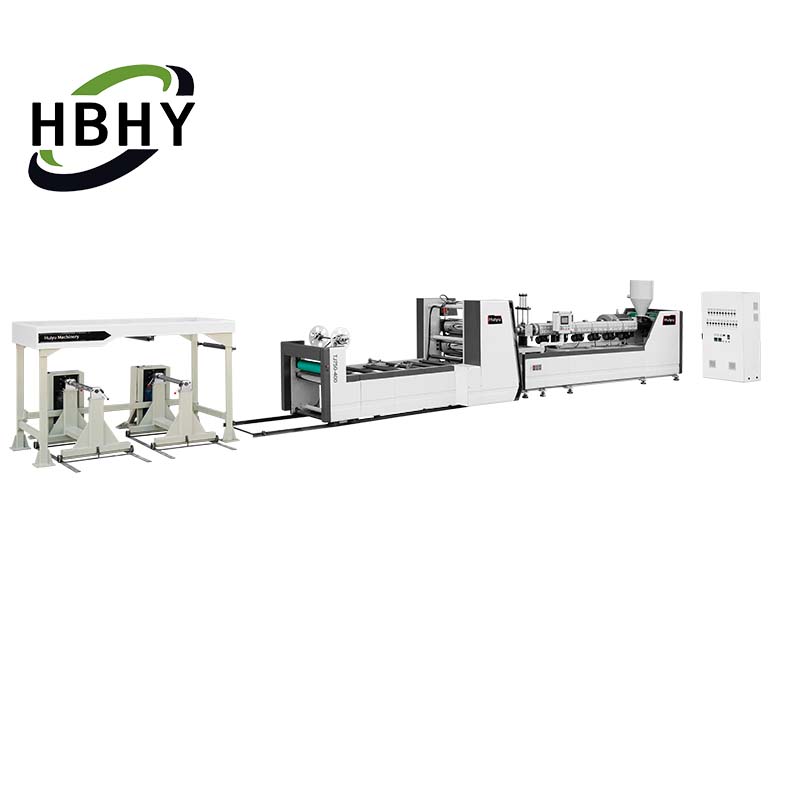

Center winding is often used for thin films and sheets where precision is key. But it can be more complex and expensive than surface winding. You also need to be careful with the tension control to avoid over - or under - winding.
Combination Winding
As the name suggests, combination winding combines the features of surface and center winding. It uses both a surface roller and a driven core to wind the sheet. This gives you the best of both worlds: the simplicity and flexibility of surface winding and the precision of center winding.
Combination winding is ideal for a variety of sheet types and thicknesses. It can adapt well to different production requirements, making it a popular choice in many plastic sheet extrusion lines.
Key Components of a Winding System
Now, let's take a look at the key components that make up a winding system.
Core Chucks
Core chucks are used to hold the core in place during the winding process. They come in different designs, such as pneumatic or mechanical chucks. Pneumatic chucks are easy to operate and can provide a strong grip on the core, while mechanical chucks are more traditional and reliable.
Tension Control System
Tension control is crucial in a winding system. If the tension is too high, the sheet might break or get stretched; if it's too low, the winding will be loose and uneven. A good tension control system uses sensors to measure the tension of the sheet and adjusts the speed of the winding accordingly.
Cutting and Transfer System
Once the roll of plastic sheet reaches the desired diameter, it needs to be cut and transferred to a new core. The cutting and transfer system takes care of this. It can use different cutting methods, such as blade cutting or laser cutting, depending on the material and thickness of the sheet.
Importance of a Good Winding System
A well - designed winding system is essential for the overall performance of a Plastic Sheet Extrusion Line. Here's why:
Product Quality
A good winding system ensures that the plastic sheet is wound evenly and tightly, which directly affects the quality of the final product. A poorly wound sheet might have wrinkles, air bubbles, or uneven thickness, which can make it unsuitable for many applications.
Production Efficiency
An efficient winding system can increase the production speed of the extrusion line. It can handle high - speed production without sacrificing the quality of the winding. This means you can produce more plastic sheets in less time, which is great for your bottom line.
Cost Savings
By reducing waste and improving product quality, a good winding system can save you money in the long run. You'll have fewer rejected products, which means less material waste and lower production costs.
Our Offerings
As a supplier of Plastic Sheet Extrusion Line, we offer a range of high - quality winding systems. Our systems are designed to be reliable, efficient, and easy to operate. Whether you need a surface winding, center winding, or combination winding system, we've got you covered.
We also provide Plastic Sheet Extruder and PLA Thermoforming Sheet Extruder that are compatible with our winding systems. This means you can get a complete solution for your plastic sheet production needs.
Conclusion
In conclusion, the winding system is a crucial part of a plastic sheet extrusion line. It plays a key role in determining the quality, efficiency, and cost - effectiveness of your production process. By choosing the right winding system and working with a reliable supplier, you can ensure that your plastic sheet production runs smoothly.
If you're in the market for a Plastic Sheet Extrusion Line or need to upgrade your existing winding system, don't hesitate to get in touch. We'd love to discuss your requirements and find the best solution for you.
References
- "Plastics Extrusion Technology Handbook" by Edward A. Griskey
- "Extrusion: The Definitive Processing Guide and Handbook" by Christopher Rauwendaal


