

As a supplier of Plastic Sheet Extrusion Lines, I am often asked about the raw material mixing process in a plastic sheet extrusion line. This process is crucial as it directly impacts the quality, properties, and performance of the final plastic sheets. In this blog, I will delve into the details of the raw material mixing process, its significance, and the steps involved.
Significance of Raw Material Mixing
The raw material mixing process in a plastic sheet extrusion line serves several important purposes. First and foremost, it ensures a homogeneous mixture of different raw materials. Plastic sheets often require a combination of polymers, additives, colorants, and fillers to achieve the desired properties. A uniform mixture ensures that these components are evenly distributed throughout the plastic matrix, resulting in consistent product quality.
For example, if colorants are not evenly mixed, the plastic sheet may have color variations, which is unacceptable for many applications. Similarly, additives such as antioxidants, UV stabilizers, and flame retardants need to be uniformly dispersed to provide the intended protection and functionality to the plastic sheet.
Secondly, proper mixing can improve the processability of the raw materials. Some polymers may have different melting points or viscosities. By mixing them thoroughly, we can achieve a more consistent melt flow during the extrusion process, reducing the risk of flow instabilities, such as sharkskin or melt fracture.
Types of Raw Materials Used
Before discussing the mixing process, it is important to understand the types of raw materials commonly used in plastic sheet extrusion.
- Polymers: These are the main components of plastic sheets. Common polymers include polyethylene (PE), polypropylene (PP), polyvinyl chloride (PVC), polystyrene (PS), and polyethylene terephthalate (PET). Each polymer has its own unique properties, such as strength, flexibility, transparency, and chemical resistance.
- Additives: Additives are used to enhance the performance and properties of the plastic sheets. They can include antioxidants to prevent oxidation and degradation, UV stabilizers to protect against sunlight, plasticizers to increase flexibility, and flame retardants to improve fire resistance.
- Colorants: Colorants are used to give the plastic sheets the desired color. They can be in the form of pigments or dyes. Pigments are insoluble particles that provide color by reflecting or absorbing light, while dyes are soluble in the polymer matrix.
- Fillers: Fillers are added to reduce the cost of the plastic sheets and improve their mechanical properties. Common fillers include calcium carbonate, talc, and glass fibers.
The Raw Material Mixing Process
Step 1: Material Selection and Preparation
The first step in the raw material mixing process is to select the appropriate raw materials based on the requirements of the final plastic sheets. This involves considering factors such as the desired properties, application, and cost.
Once the raw materials are selected, they need to be prepared for mixing. This may involve drying the polymers to remove any moisture, as moisture can cause problems during the extrusion process, such as foaming or poor adhesion. Additives and colorants may also need to be pre - blended or processed to ensure uniform dispersion.
Step 2: Pre - Mixing
Pre - mixing is an important step to ensure that the raw materials are initially combined in a relatively uniform manner. This can be done using a variety of equipment, such as tumble blenders, ribbon blenders, or high - speed mixers.
Tumble blenders are simple and cost - effective devices that use the rotation of a container to mix the raw materials. Ribbon blenders, on the other hand, use a helical ribbon agitator to move the materials along the length of the blender, providing a more intense mixing action. High - speed mixers are capable of achieving very rapid and thorough mixing by using high - speed rotating blades to shear and disperse the materials.
During pre - mixing, the polymers, additives, colorants, and fillers are loaded into the blender in the correct proportions. The mixing time and speed are carefully controlled to ensure a good initial dispersion of the components.
Step 3: Extruder - Based Mixing
After pre - mixing, the raw materials are fed into the extruder. The extruder plays a crucial role in further mixing and melting the raw materials.
As the raw materials enter the extruder, they are conveyed along the screw channel by the rotation of the screw. The screw has different zones, including the feed zone, compression zone, and metering zone. In the feed zone, the raw materials are fed into the extruder and start to be conveyed. In the compression zone, the screw compresses the materials, increasing the pressure and temperature, which helps to melt the polymers.
The extruder barrel is heated to a specific temperature to ensure that the polymers melt completely. The heat is transferred from the barrel to the raw materials through conduction and shear heating generated by the rotation of the screw.
The screw design also plays an important role in mixing. Special mixing elements, such as kneading blocks or mixing screws, can be incorporated into the screw to enhance the mixing action. These elements create a complex flow pattern within the extruder, causing the materials to be sheared, stretched, and folded, resulting in a more homogeneous mixture.
Step 4: Quality Control
Throughout the raw material mixing process, quality control is essential to ensure that the final plastic sheets meet the required specifications. This involves taking samples at different stages of the process and analyzing them for various properties, such as color, density, melt flow index, and mechanical properties.
For example, color can be measured using a colorimeter to ensure that the plastic sheets have the correct color and color consistency. The melt flow index is a measure of the flowability of the molten polymer and can be used to monitor the melting and mixing process. Mechanical properties, such as tensile strength and elongation, can be tested to ensure that the plastic sheets have the required strength and flexibility.
Impact of Mixing on the Extrusion Process and Final Product
The quality of the raw material mixing process has a significant impact on the extrusion process and the final product.
- Extrusion Process: A well - mixed raw material results in a more stable and consistent melt flow during extrusion. This reduces the risk of flow instabilities, such as die drool, sharkskin, and melt fracture, which can lead to surface defects on the plastic sheets. It also allows for more precise control of the extrusion parameters, such as extrusion speed and pressure, resulting in better process efficiency.
- Final Product: The final plastic sheets produced from a properly mixed raw material have more consistent properties. They have uniform color, better mechanical properties, and improved chemical resistance. This makes them more suitable for a wide range of applications, such as packaging, construction, automotive, and consumer goods.
Our Plastic Sheet Extrusion Lines
At our company, we offer a range of high - quality Plastic Sheet Extrusion Lines that are designed to ensure efficient and effective raw material mixing. Our Plastic Sheet Extrusion Machines are equipped with advanced screw designs and mixing elements to provide excellent mixing performance.
In addition, our Automatic High - Precision Sheet Extrusion Machines are capable of producing plastic sheets with high precision and consistency. They are integrated with state - of - the - art control systems that allow for precise control of the extrusion process, including the raw material mixing process.
Conclusion
The raw material mixing process in a plastic sheet extrusion line is a complex and crucial step that directly affects the quality and performance of the final plastic sheets. By understanding the types of raw materials, the mixing process steps, and the importance of quality control, we can ensure that the plastic sheets produced meet the highest standards.

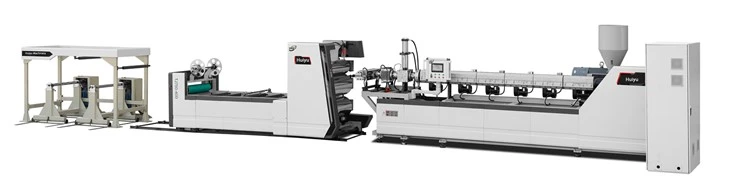
If you are interested in our Plastic Sheet Extrusion Lines or have any questions about the raw material mixing process, please feel free to contact us for further discussion and potential procurement. We are committed to providing you with the best solutions for your plastic sheet extrusion needs.
References
- "Plastics Extrusion Technology" by Allan A. Griff.
- "Handbook of Plastic Films" by O. Olabisi.


