

What is the plasticizing effect in a plastic sheet extrusion line?
As a provider of Plastic Sheet Extrusion Lines, I've witnessed firsthand the crucial role that the plasticizing effect plays in the production of high - quality plastic sheets. In this blog, we'll delve into what the plasticizing effect is, why it matters, and how it impacts the overall performance of a plastic sheet extrusion line.
Understanding the Plasticizing Effect
The plasticizing effect refers to the process of transforming solid plastic raw materials into a homogeneous, molten state suitable for extrusion. This process is a fundamental step in the plastic sheet extrusion line. When plastic resin, usually in the form of pellets or granules, enters the extruder, it undergoes a series of physical and chemical changes under the influence of heat and mechanical shear.
Heat is applied to the plastic material through the extruder's barrel, which is equipped with heating elements. As the temperature rises, the polymer chains in the plastic start to gain energy and become more mobile. At the same time, the screw inside the extruder rotates, exerting mechanical shear force on the plastic. This shear force further breaks down the agglomerates of plastic particles, disperses any additives present, and ensures a uniform distribution of temperature and composition throughout the molten plastic.
Why the Plasticizing Effect is Crucial
The quality of the plasticizing effect directly affects the final properties of the plastic sheet. A well - plasticized material results in a sheet with consistent thickness, smooth surface finish, and excellent mechanical properties.
- Thickness Consistency: When the plastic is properly plasticized, it flows evenly through the die of the extrusion line. This even flow ensures that the thickness of the plastic sheet remains constant across its width and length. In contrast, poor plasticizing can lead to uneven flow, causing variations in thickness, which is a major defect in plastic sheet production.
- Surface Finish: A homogeneous molten plastic can form a smooth surface when it is extruded and cooled. If the plasticizing is inadequate, there may be unmelted particles or inhomogeneities in the material, which will manifest as surface defects such as streaks, bumps, or pits on the final sheet.
- Mechanical Properties: The plasticizing process also influences the molecular orientation and structure of the plastic. A good plasticizing effect helps to achieve the desired molecular arrangement, which in turn enhances the strength, flexibility, and impact resistance of the plastic sheet. For example, in applications where the plastic sheet needs to withstand high stress or impact, proper plasticizing is essential to ensure that the sheet can perform as required.
Factors Affecting the Plasticizing Effect
Several factors can influence the plasticizing effect in a plastic sheet extrusion line.
- Screw Design: The design of the extruder screw is one of the most important factors. Different screw geometries, such as the length - to - diameter ratio, the pitch of the screw flights, and the presence of mixing sections, can significantly affect the plasticizing performance. A well - designed screw can provide the right amount of shear and mixing, ensuring efficient plasticizing. For instance, a screw with a longer length - to - diameter ratio generally offers more residence time for the plastic to be heated and sheared, resulting in better plasticizing.
- Temperature Control: Precise temperature control is vital for achieving a good plasticizing effect. The temperature in different zones of the extruder barrel needs to be carefully adjusted according to the type of plastic being processed. If the temperature is too low, the plastic may not melt completely; if it is too high, the plastic may degrade, leading to a loss of properties.
- Feed Rate: The rate at which the plastic raw material is fed into the extruder also impacts plasticizing. A consistent and appropriate feed rate ensures that the plastic has enough time to be plasticized within the extruder. A too - high feed rate may not allow sufficient time for complete melting and mixing, while a too - low feed rate can lead to over - heating and degradation of the plastic.
Our Solutions for Optimal Plasticizing Effect
At our company, we offer a range of advanced Plastic Sheet Extrusion Machine that are designed to achieve an excellent plasticizing effect. Our machines are equipped with state - of - the - art screw designs that are optimized for different types of plastics. The screws are made of high - quality materials with excellent wear resistance, ensuring long - term stable performance.
We also incorporate advanced temperature control systems in our extruders. These systems use precise sensors and controllers to maintain the temperature within a narrow range, guaranteeing consistent plasticizing. Additionally, our machines are designed to have a flexible feed system, allowing operators to adjust the feed rate according to the specific requirements of the production process.
Our Automatic High - Precision Sheet Extrusion Machine is a prime example of our commitment to providing high - quality plastic sheet extrusion solutions. This machine combines advanced technology with user - friendly operation, enabling customers to achieve outstanding plasticizing effects and produce top - quality plastic sheets.
Impact of the Plasticizing Effect on Production Efficiency
In addition to product quality, the plasticizing effect also has a significant impact on production efficiency. A well - plasticized material flows more smoothly through the extrusion line, reducing the likelihood of blockages and downtime. This means that the extrusion line can operate continuously at a higher speed, increasing the overall production output.
Moreover, when the plasticizing is efficient, there is less waste generated due to defective products. This not only saves raw materials but also reduces the cost associated with rework or scrap disposal. As a result, improving the plasticizing effect can lead to substantial cost savings and increased profitability for plastic sheet manufacturers.
The Role of Our Plastic Sheet Extruder in Achieving Ideal Plasticizing
Our Plastic Sheet Extruders are engineered to provide the optimal conditions for plasticizing. They are capable of handling a wide range of plastic materials, including polypropylene (PP), polyethylene (PE), polyvinyl chloride (PVC), and more.
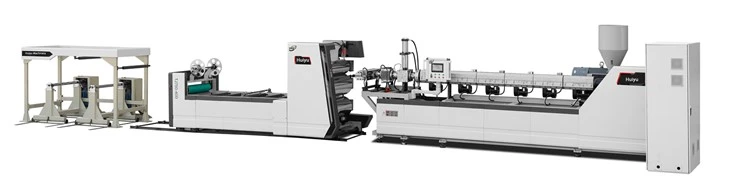

The extruders are equipped with advanced control systems that allow operators to monitor and adjust the key parameters related to plasticizing, such as temperature, screw speed, and feed rate. This level of control ensures that the plasticizing process can be fine - tuned according to the specific requirements of each production run.
Conclusion
The plasticizing effect is a critical aspect of the plastic sheet extrusion process. It determines the quality, performance, and production efficiency of plastic sheets. As a leading supplier of Plastic Sheet Extrusion Lines, we understand the importance of achieving an excellent plasticizing effect. Our range of extrusion machines, including the Plastic Sheet Extrusion Machine, Automatic High - Precision Sheet Extrusion Machine, and Plastic Sheet Extruder, are designed to provide the best possible plasticizing performance.
If you are in the market for a high - quality plastic sheet extrusion line or want to improve the plasticizing effect in your existing production process, we invite you to contact us for a detailed discussion. Our team of experts is ready to provide you with customized solutions to meet your specific needs.
References
- "Plastics Extrusion Technology" by Allan A. Griff.
- "Handbook of Plastic Extrusion Technology" edited by James F. Carley.


