The sheet extrusion process is a fundamental manufacturing method used to produce plastic sheets of various thicknesses, widths, and materials. As a sheet extruder supplier, we understand the critical role that every component of the extrusion system plays in achieving the desired product quality. One such crucial factor is the die lip gap, which significantly impacts the sheet thickness in a sheet extruder. In this blog, we will explore the relationship between the die lip gap and sheet thickness, and how it affects the overall performance of the extrusion process.
Understanding the Die Lip Gap in a Sheet Extruder
In a sheet extruder, the die is a key component that shapes the molten plastic into a continuous sheet. The die lip gap refers to the distance between the two lips of the die through which the molten plastic flows. This gap is carefully controlled to ensure that the plastic sheet emerges from the die with the desired thickness and uniformity.
The die lip gap can be adjusted manually or automatically, depending on the design of the extruder. Manual adjustment typically involves using screws or other mechanical means to change the distance between the die lips. Automatic adjustment, on the other hand, uses sensors and actuators to continuously monitor and adjust the die lip gap based on real-time measurements of the sheet thickness.
The Impact of Die Lip Gap on Sheet Thickness
The die lip gap has a direct and significant impact on the sheet thickness. Here's how:
1. Thickness Control
The most obvious impact of the die lip gap is on the initial thickness of the sheet as it exits the die. A wider die lip gap allows more molten plastic to flow through, resulting in a thicker sheet. Conversely, a narrower die lip gap restricts the flow of plastic, producing a thinner sheet. Therefore, by adjusting the die lip gap, manufacturers can precisely control the thickness of the extruded sheet.
For example, if a manufacturer needs to produce a plastic sheet with a specific thickness of 2 mm, they can set the die lip gap accordingly. If the sheet is coming out too thick, they can reduce the die lip gap slightly until the desired thickness is achieved.
2. Thickness Uniformity
In addition to controlling the overall thickness, the die lip gap also affects the uniformity of the sheet thickness across its width. An uneven die lip gap can cause variations in the flow of molten plastic, resulting in a sheet with inconsistent thickness.
For instance, if one side of the die lip gap is wider than the other, more plastic will flow through the wider side, causing that part of the sheet to be thicker. This can lead to quality issues such as warping, curling, and poor performance in downstream processing operations. To ensure uniform thickness, it is essential to maintain a consistent die lip gap across the entire width of the die.
3. Flow Distribution
The die lip gap also influences the distribution of the molten plastic within the die. A proper die lip gap ensures that the plastic flows evenly across the width of the die, promoting a smooth and uniform extrusion process.
If the die lip gap is too small, the plastic may experience high shear stress, which can lead to melt fracture and surface defects on the sheet. On the other hand, if the die lip gap is too large, the plastic may not be properly shaped, resulting in a sheet with poor dimensional accuracy.

Factors Affecting the Die Lip Gap and Sheet Thickness Relationship
While the die lip gap is a critical factor in sheet thickness control, several other factors can also influence this relationship. These include:
1. Material Properties
Different plastic materials have different flow characteristics, which can affect how they respond to changes in the die lip gap. For example, materials with high viscosity require a larger die lip gap to allow for proper flow, while low-viscosity materials can be extruded through a narrower gap.
2. Extrusion Temperature
The temperature of the molten plastic also plays a role in the die lip gap - sheet thickness relationship. Higher temperatures reduce the viscosity of the plastic, allowing it to flow more easily through the die. As a result, at higher temperatures, a narrower die lip gap may be sufficient to achieve the desired sheet thickness.
3. Screw Speed
The screw speed of the extruder determines the rate at which the molten plastic is fed into the die. A higher screw speed increases the flow rate of the plastic, which may require a wider die lip gap to prevent excessive pressure build-up in the die.
Importance of Precise Die Lip Gap Control
Precise control of the die lip gap is crucial for several reasons:
1. Product Quality
As mentioned earlier, a consistent and accurately adjusted die lip gap is essential for producing sheets with uniform thickness and high quality. Sheets with inconsistent thickness can lead to product failures, customer complaints, and increased production costs due to scrap and rework.
2. Process Efficiency
Proper die lip gap control helps to optimize the extrusion process by ensuring smooth and stable plastic flow. This reduces the risk of production interruptions, such as die blockages and melt fractures, which can cause downtime and loss of productivity.
3. Cost Savings
By producing sheets with the desired thickness and uniformity, manufacturers can reduce material waste and improve overall production efficiency. This leads to significant cost savings in the long run.
Our Solutions for Die Lip Gap Control
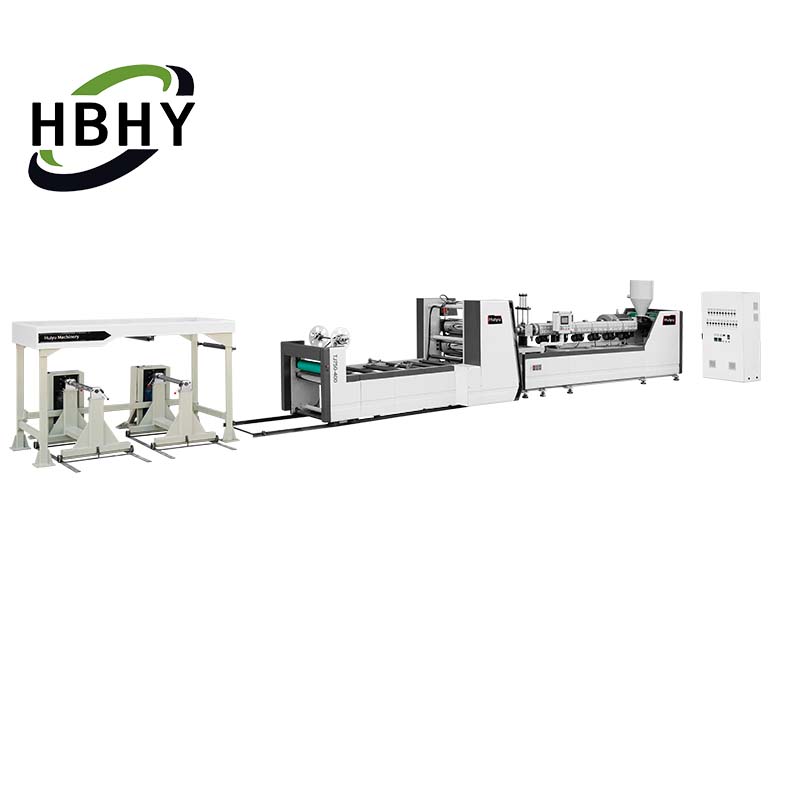
As a leading Plastic Sheet Extrusion Line supplier, we offer a range of advanced sheet extruders equipped with state-of-the-art die lip gap control systems. Our Automatic High-Precision Sheet Extrusion Machine uses advanced sensors and actuators to continuously monitor and adjust the die lip gap, ensuring precise thickness control and uniformity.
In addition, our PLA Thermoforming Sheet Extruder is specifically designed for processing biodegradable PLA materials. It features a highly accurate die lip gap adjustment mechanism that allows for precise control of the sheet thickness, making it ideal for applications in the packaging and disposable products industries.
Conclusion
The die lip gap is a critical factor in the sheet extrusion process, with a direct impact on the sheet thickness and quality. By understanding the relationship between the die lip gap and sheet thickness, and by using advanced die lip gap control systems, manufacturers can produce high-quality plastic sheets with consistent thickness and excellent uniformity.
If you are looking for a reliable sheet extruder supplier with expertise in die lip gap control, we are here to help. Our team of experienced engineers can provide you with customized solutions to meet your specific production needs. Contact us today to start a conversation about your sheet extrusion requirements and explore how our products can benefit your business.
References
- "Plastics Extrusion Technology" by Allan A. Griff.
- "Extrusion Dies for Plastics and Rubber" by George Gogos.
- Technical papers from the Society of Plastics Engineers (SPE).