

Hey there! As a supplier of Plastic Sheet Extrusion Lines, I often get asked about heat transfer efficiency in these systems. So, let's dive right in and explore what it is and why it matters.
First off, what exactly is heat transfer efficiency in a plastic sheet extrusion line? Well, in simple terms, it's how effectively heat is transferred within the extrusion process. In a plastic sheet extrusion line, we start with plastic raw materials, usually in the form of pellets. These pellets need to be melted down to a uniform, viscous state so they can be shaped into sheets. Heat transfer is crucial for this melting process and subsequent shaping.
There are three main types of heat transfer that occur in a plastic sheet extrusion line: conduction, convection, and radiation. Conduction is the transfer of heat through direct contact. In the extruder barrel, the heating elements are in direct contact with the barrel wall, and heat is conducted from the elements to the barrel and then to the plastic pellets inside. This is the most common way heat is transferred to start melting the plastic.
Convection, on the other hand, involves the transfer of heat through the movement of a fluid. In the case of plastic extrusion, as the melted plastic moves through the extruder, there is a certain amount of convective heat transfer. The moving plastic helps distribute the heat more evenly within the melt.
Radiation is the transfer of heat through electromagnetic waves. While it plays a relatively minor role compared to conduction and convection in a plastic sheet extrusion line, it can still contribute to the overall heat transfer, especially in areas where there are exposed heating elements.
Now, why is heat transfer efficiency so important? Well, for starters, it directly affects the quality of the plastic sheets produced. If the heat transfer is inefficient, the plastic may not melt uniformly. This can lead to issues like uneven thickness in the sheets, poor surface finish, and even structural weaknesses. For example, if some parts of the plastic are not heated enough, they may not flow properly during the extrusion process, resulting in a rough or bumpy surface on the final sheet.
In addition to quality, heat transfer efficiency also impacts energy consumption. An inefficient heat transfer system means that more energy is required to achieve the desired melting temperature. This not only increases production costs but also has a negative environmental impact. As a supplier of Plastic Sheet Extrusion Line, we understand the importance of providing systems that are energy - efficient. Our Plastic Sheet Extrusion Machine is designed with advanced heating elements and insulation to maximize heat transfer efficiency.
Let's take a closer look at some of the factors that can affect heat transfer efficiency in a plastic sheet extrusion line. One of the key factors is the design of the extruder barrel. A well - designed barrel should have good thermal conductivity to ensure efficient heat transfer from the heating elements to the plastic. The thickness of the barrel wall also matters. If the wall is too thick, it can act as an insulator and reduce the rate of heat transfer. On the other hand, if it's too thin, it may not be able to withstand the high pressures inside the extruder.
The type of heating elements used is another important factor. There are different types of heating elements available, such as band heaters, cartridge heaters, and induction heaters. Each type has its own advantages and disadvantages in terms of heat transfer efficiency. For example, induction heaters are known for their high efficiency because they directly heat the metal of the extruder barrel through electromagnetic induction, reducing heat loss.
The insulation around the extruder is also crucial. Good insulation helps prevent heat from escaping to the surrounding environment. This not only improves heat transfer efficiency but also makes the working environment safer and more comfortable for operators. Our Automatic High - Precision Sheet Extrusion Machine comes with high - quality insulation to minimize heat loss.
The speed at which the plastic is fed into the extruder can also impact heat transfer efficiency. If the feed rate is too high, the plastic may not have enough time to absorb the heat properly, leading to inefficient melting. Conversely, if the feed rate is too low, it can result in overheating and degradation of the plastic.
To measure heat transfer efficiency in a plastic sheet extrusion line, we can use various methods. One common approach is to measure the temperature of the plastic at different points along the extruder. By comparing the actual temperature with the desired temperature, we can get an idea of how effectively the heat is being transferred. Another method is to calculate the energy input and compare it with the amount of heat actually absorbed by the plastic.
Improving heat transfer efficiency in a plastic sheet extrusion line can be achieved through several strategies. One way is to regularly maintain and clean the heating elements and the extruder barrel. Over time, dirt and debris can accumulate on the heating elements, reducing their ability to transfer heat effectively. Cleaning them can restore their performance.

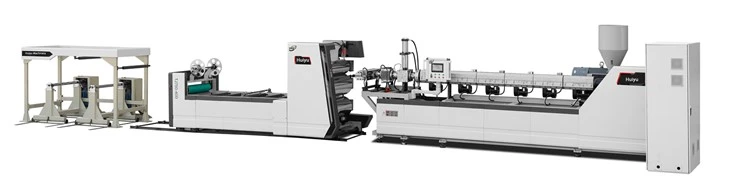
Upgrading to more efficient heating elements, as mentioned earlier, is also a great way to improve heat transfer. For example, replacing old band heaters with induction heaters can significantly increase efficiency. Additionally, optimizing the insulation around the extruder can reduce heat loss and improve overall efficiency.
In conclusion, heat transfer efficiency is a critical aspect of a plastic sheet extrusion line. It affects both the quality of the products and the energy consumption of the production process. As a supplier of plastic sheet extrusion equipment, we are constantly working to improve the heat transfer efficiency of our Plastic Sheet Extrusion Line. We believe that by providing efficient and high - quality equipment, we can help our customers produce better plastic sheets while reducing their energy costs.
If you're in the market for a plastic sheet extrusion line and want to learn more about how our products can offer excellent heat transfer efficiency, feel free to reach out to us for a detailed discussion. We're always happy to talk about how we can meet your specific needs and help you achieve the best results in your plastic sheet production.
References
- "Plastics Extrusion Technology Handbook" by Allan A. Griff
- "Extrusion of Polymers: Theory and Practice" by Manfred Dekker


