

In the realm of manufacturing, thermoforming machines play a pivotal role in shaping plastic materials into a wide array of products. As a supplier of small thermoforming machines, I am often asked about the forming accuracy of these machines. In this blog post, I will delve into the concept of forming accuracy, its significance, and how our small thermoforming machines achieve high levels of precision.
Understanding Forming Accuracy
Forming accuracy refers to the degree to which the final product conforms to the intended design specifications. In the context of thermoforming, it encompasses several aspects, including dimensional accuracy, shape fidelity, and surface quality. Dimensional accuracy ensures that the product's size and dimensions are within the specified tolerances. Shape fidelity, on the other hand, pertains to the ability of the machine to replicate the exact shape of the mold. Surface quality refers to the smoothness, finish, and absence of defects on the product's surface.
Importance of Forming Accuracy
High forming accuracy is crucial for several reasons. Firstly, it ensures that the products meet the required quality standards. In industries such as food packaging, medical devices, and automotive components, precise dimensions and shapes are essential for proper functionality and safety. For example, in the production of disposable plastic cups, accurate forming ensures a proper fit with lids and prevents leakage. Secondly, forming accuracy reduces waste and production costs. When products are formed with high precision, there is less need for rework or scrap, resulting in higher productivity and lower material consumption. Finally, it enhances the reputation of the manufacturer. Consistently producing high-quality products with accurate forming builds trust with customers and can lead to repeat business and positive word-of-mouth.
Factors Affecting Forming Accuracy
Several factors can influence the forming accuracy of a small thermoforming machine. These include:
1. Machine Design and Construction
The design and construction of the thermoforming machine play a significant role in determining its forming accuracy. A well-designed machine with high-quality components and a rigid frame can minimize vibrations and ensure stable operation. Additionally, advanced control systems can precisely regulate the temperature, pressure, and speed of the forming process, resulting in more accurate and consistent results.
2. Mold Quality
The quality of the mold is another critical factor. A well-made mold with precise dimensions and smooth surfaces will produce products with better shape fidelity and surface quality. The material used for the mold, such as aluminum or steel, can also affect the forming accuracy. Aluminum molds are lightweight and have good heat transfer properties, but they may wear out faster than steel molds.
3. Material Properties
The properties of the plastic material being formed, such as its thickness, temperature sensitivity, and flow characteristics, can impact the forming accuracy. Different materials require different processing conditions, and it is essential to optimize these conditions to achieve the best results. For example, some materials may require higher temperatures or longer heating times to achieve proper forming.
4. Process Parameters
The process parameters, including temperature, pressure, and cycle time, need to be carefully controlled to ensure accurate forming. Incorrect temperature settings can lead to uneven heating and cooling, resulting in warping or dimensional variations. Similarly, improper pressure can cause the material to stretch or tear, affecting the shape and integrity of the product.
How Our Small Thermoforming Machines Ensure High Forming Accuracy
At our company, we are committed to providing small thermoforming machines that offer exceptional forming accuracy. Here's how we achieve this:

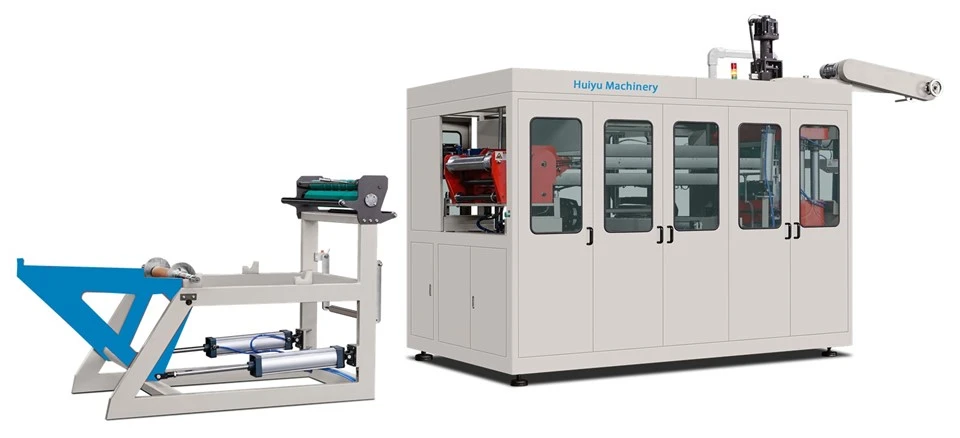
1. Advanced Machine Design
Our machines are designed with the latest technology and engineering principles to ensure high precision and reliability. We use high-quality components and a rigid frame to minimize vibrations and ensure stable operation. The advanced control systems allow for precise regulation of the temperature, pressure, and speed of the forming process, resulting in consistent and accurate results.
2. High-Quality Molds
We work closely with our customers to design and manufacture high-quality molds that meet their specific requirements. Our molds are made from the best materials and are precision-machined to ensure accurate dimensions and smooth surfaces. We also offer mold testing and optimization services to ensure that the molds produce products with the highest level of forming accuracy.
3. Material Expertise
Our team of experts has extensive knowledge and experience in working with a wide range of plastic materials. We understand the properties of different materials and can recommend the best processing conditions to achieve optimal forming accuracy. We also offer material testing and analysis services to ensure that the materials used in the forming process are of the highest quality.
4. Process Optimization
We continuously optimize our thermoforming processes to improve forming accuracy and efficiency. Our engineers use advanced simulation tools to analyze the forming process and identify areas for improvement. We also conduct extensive testing and validation to ensure that the optimized processes produce products with consistent and accurate results.
Applications of Our Small Thermoforming Machines
Our small thermoforming machines are suitable for a variety of applications, including:
1. Disposable Plastic Cups
We offer a range of Disposable Plastic Cup Making Machine that can produce high-quality disposable plastic cups with accurate dimensions and smooth surfaces. Our machines are capable of forming cups of different sizes and shapes, and they can be customized to meet the specific requirements of our customers.
2. Food Packaging
Our small thermoforming machines are also ideal for producing food packaging products, such as trays, containers, and lids. The high forming accuracy ensures a proper fit and seal, which helps to preserve the freshness and quality of the food. Our machines can handle a variety of plastic materials, including PET, PP, and PS, and they can be equipped with features such as cutting, punching, and stacking to streamline the production process.
3. Medical Devices
In the medical industry, precision and accuracy are of utmost importance. Our small thermoforming machines can produce medical devices, such as trays, blister packs, and housings, with high forming accuracy and surface quality. The machines are designed to meet the strict regulatory requirements of the medical industry, and they can be equipped with features such as cleanroom compatibility and sterilization capabilities.
4. Automotive Components
Our small thermoforming machines can also be used to produce automotive components, such as interior trim parts, dashboard panels, and door panels. The high forming accuracy ensures a proper fit and finish, which enhances the overall appearance and functionality of the vehicle. Our machines can handle a variety of plastic materials, including ABS, PC, and PMMA, and they can be customized to meet the specific requirements of the automotive industry.
Conclusion
Forming accuracy is a critical factor in the performance and quality of small thermoforming machines. As a supplier of these machines, we understand the importance of providing our customers with products that offer high precision and reliability. Our advanced machine design, high-quality molds, material expertise, and process optimization ensure that our small thermoforming machines can produce products with exceptional forming accuracy. Whether you are in the food packaging, medical devices, automotive components, or other industries, our machines can help you achieve your production goals. If you are interested in learning more about our small thermoforming machines or would like to discuss your specific requirements, please feel free to contact us. We look forward to working with you to provide the best solutions for your thermoforming needs.
References
- "Thermoforming Technology Handbook" by Robert W. Crawford
- "Plastics Processing: Modeling and Simulation" by Johannes Karger-Kocsis
- "Handbook of Thermoforming" by James F. Carley


