

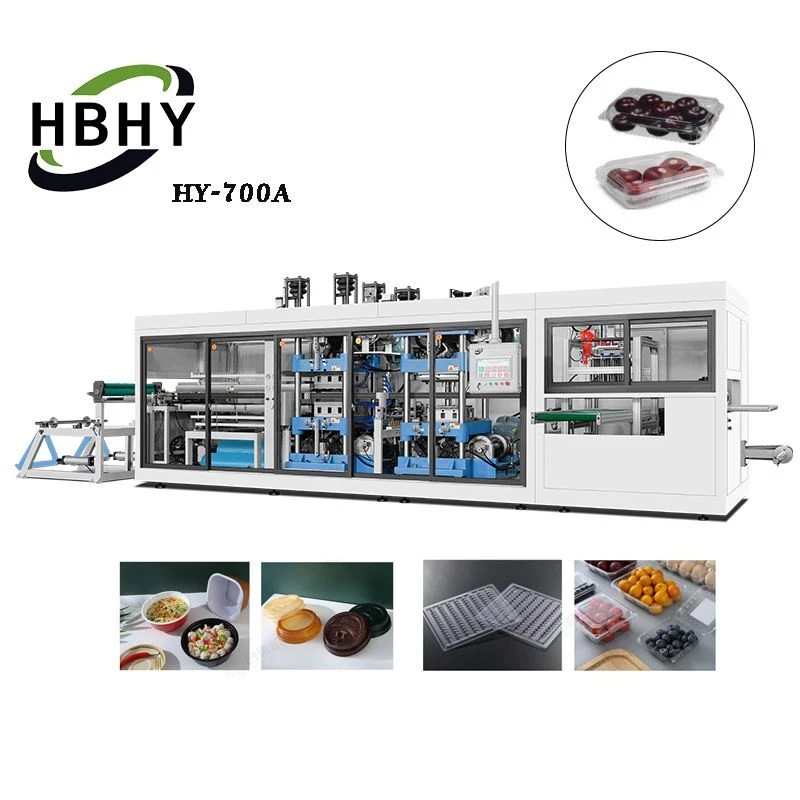
Hey there! As a supplier of Food Container Making Machines, I've seen firsthand how crucial it is to follow safety regulations when using these machines. In this blog, I'll share some key safety rules to keep in mind, which can help you operate our machines, like the Plastic Thermoforming Machine, Plastic Food Box Produce Machine, and Three Station Thermoforming Machine, safely and efficiently.
Pre - operation Safety Checks
Before you start up the food container making machine, there are several important checks you need to do. First off, take a good look at the machine's exterior. Check for any visible damage, like cracks in the casing or loose parts. A damaged machine can not only affect the quality of the food containers it produces but also pose a serious safety risk.
Next, examine the electrical connections. Make sure all the wires are properly plugged in and there are no signs of fraying or exposed wires. Faulty electrical connections can lead to short - circuits, which might cause fires or electric shocks. Also, ensure that the machine is grounded correctly. Grounding helps to prevent electrical currents from building up in the machine and keeps operators safe.
The lubrication of moving parts is another critical aspect. Our machines have many moving components, such as belts, gears, and pistons. Lack of proper lubrication can cause excessive friction, leading to overheating and premature wear and tear. It can also make the machine more difficult to operate and increase the risk of mechanical failures. So, check the lubricant levels and refill them if necessary according to the machine's manual.
Operator Training
One of the most important safety measures is proper operator training. No one should operate the food container making machine without being properly trained. Training should cover all aspects of the machine, from basic operation to emergency procedures.
During the training, operators should learn how to start and stop the machine correctly. They need to understand the functions of different control buttons and switches. For example, they should know how to adjust the temperature settings for thermoforming machines, as incorrect temperatures can result in defective food containers or even damage the machine.
Operators should also be trained on how to load and unload materials safely. When loading plastic sheets or other raw materials into the machine, they need to follow the correct procedures to avoid getting their hands caught in the moving parts. And when unloading the finished food containers, they should be careful not to damage the products or themselves.
Emergency procedures are a vital part of the training. Operators should know where the emergency stop button is located and how to use it in case of an emergency. They should also be familiar with what to do in case of a fire, electrical malfunction, or other serious problems.
Personal Protective Equipment (PPE)
Wearing the right personal protective equipment is non - negotiable when operating a food container making machine. First, safety glasses are a must. These machines can generate small particles or debris during the manufacturing process, which can fly into the eyes and cause serious injuries. Safety glasses protect the eyes from such hazards.
Gloves are also important. Depending on the type of machine and the materials being used, different types of gloves may be required. For example, heat - resistant gloves are necessary when working with thermoforming machines, as the plastic sheets can get very hot during the forming process. Gloves also provide a better grip when handling materials, reducing the risk of dropping them and causing accidents.
Ear protection is another essential PPE. Some food container making machines can be quite noisy, especially those with high - speed motors or pneumatic systems. Prolonged exposure to loud noise can lead to hearing loss. So, operators should wear earplugs or earmuffs to protect their ears.
Machine Guarding
Machine guarding is designed to prevent operators from coming into contact with dangerous moving parts. Our machines are equipped with various types of guards, such as safety fences and covers. These guards should never be removed or bypassed during normal operation.
The safety fences around the machine prevent operators from accidentally reaching into the working area while the machine is running. They act as a physical barrier between the operator and the moving parts, like the forming molds and cutting blades. Covers are used to protect specific components, such as the heating elements in thermoforming machines. They not only prevent contact with hot surfaces but also keep dust and debris out of the sensitive parts.
Regularly check the machine guards to make sure they are in good condition. If a guard is damaged or missing, it should be repaired or replaced immediately. Remember, machine guards are there to protect you, so don't take them lightly.
Maintenance and Inspection
Regular maintenance and inspection are key to keeping the food container making machine safe and in good working condition. Maintenance should be carried out according to a strict schedule. This includes cleaning the machine regularly to remove dirt, dust, and plastic residues. A dirty machine can affect its performance and increase the risk of malfunctions.
Inspect the machine's components regularly for signs of wear and tear. Check the belts for signs of cracking or stretching, and the gears for tooth wear. Replace any worn - out parts as soon as possible. Using worn - out parts can lead to machine breakdowns and safety hazards.
Keep a detailed maintenance log. This log should record all the maintenance activities, including when they were done, what was done, and who did it. It helps to track the machine's maintenance history and ensures that all necessary maintenance tasks are carried out on time.
Hazardous Materials Handling
If your food container making process involves the use of hazardous materials, such as certain types of plastics or chemicals, special handling procedures must be followed. First, store these materials in a safe and secure location. They should be kept in a well - ventilated area away from sources of heat and ignition.
When handling hazardous materials, use the appropriate equipment, such as chemical - resistant gloves and aprons. Make sure to follow the correct procedures for mixing, measuring, and disposing of these materials. Improper handling of hazardous materials can lead to chemical burns, respiratory problems, or environmental pollution.
Fire Safety
Fire is a major concern when operating a food container making machine, especially those that involve heating processes. To prevent fires, keep the work area clean and free of flammable materials. Don't leave plastic scraps or other combustible materials near the machine.

Install fire extinguishers in the work area. Make sure they are easily accessible and in good working condition. Operators should know how to use the fire extinguishers properly. Also, have a fire evacuation plan in place. Everyone in the workplace should know the evacuation routes and the location of the assembly points.
Conclusion
Following these safety regulations is essential for anyone using a food container making machine. By doing pre - operation checks, ensuring proper operator training, wearing PPE, using machine guards, performing regular maintenance, handling hazardous materials correctly, and being prepared for fires, you can create a safe working environment.
If you're interested in our Plastic Thermoforming Machine, Plastic Food Box Produce Machine, or Three Station Thermoforming Machine, and want to learn more about how to operate them safely or discuss a purchase, feel free to reach out. We're here to help you get the most out of our machines while keeping safety as our top priority.
References
- Manufacturer's manual for food container making machines
- Occupational Safety and Health Administration (OSHA) guidelines for industrial machinery operation
- Industry best practices for thermoforming and food container manufacturing


