

In the dynamic world of plastic packaging manufacturing, PET plastic cup machines play a pivotal role. As a leading supplier of PET Plastic Cup Machines, I've witnessed firsthand the distinct features and applications of both semi-automatic and fully-automatic PET plastic cup machines. This blog aims to delve into the differences between these two types of machines, helping you make an informed decision when choosing the right equipment for your production needs.
1. Operational Mechanism
Semi-automatic PET Plastic Cup Machines
Semi-automatic machines require a certain degree of manual intervention in the production process. The operator is typically responsible for tasks such as loading the preforms or sheets into the machine, adjusting settings between cycles, and removing the finished cups from the machine. For example, after the heating and forming process, the operator needs to physically take out the newly formed cups. This level of manual involvement gives the operator more control over certain aspects of the production, but it also means that the production speed is relatively limited.
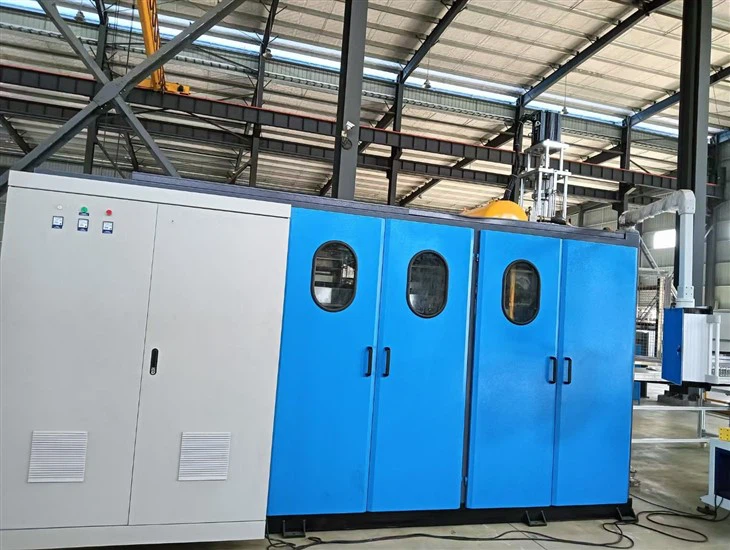

Fully-automatic PET Plastic Cup Machines
In contrast, fully-automatic machines are designed to perform the entire production process with minimal human intervention. From the moment the raw materials are fed into the machine to the final output of the finished cups, all operations are carried out automatically. The machine can handle tasks such as preform feeding, heating, stretching, blowing, and cup ejection in a continuous and seamless manner. This high level of automation significantly increases the production efficiency and reduces the need for a large workforce.
2. Production Efficiency
Speed
Fully-automatic PET plastic cup machines generally have a much higher production speed compared to semi-automatic machines. A fully-automatic machine can produce hundreds or even thousands of cups per hour, depending on its specifications. This makes it ideal for large-scale production where high volumes are required in a short period. On the other hand, semi-automatic machines have a lower production speed due to the manual steps involved. They are more suitable for small to medium-scale production or for situations where customization and flexibility are prioritized over high-speed output.
Consistency
Fully-automatic machines also offer greater consistency in production. Since the entire process is automated, the machines can maintain a stable production rhythm and ensure that each cup meets the same quality standards. In semi-automatic machines, the quality of the cups may vary slightly due to the human factor. For example, the operator's skill level and fatigue can affect the precision of tasks such as preform placement and cup removal, leading to some variations in the final product.
3. Cost Considerations
Initial Investment
The initial investment for a fully-automatic PET plastic cup machine is usually higher than that of a semi-automatic machine. Fully-automatic machines are equipped with advanced technology and complex control systems, which contribute to their higher price tag. However, it's important to consider the long-term benefits. If your production volume is large, the higher initial cost can be offset by the increased production efficiency and reduced labor costs over time.
Operating Costs
In terms of operating costs, semi-automatic machines may require more labor, which can increase the overall cost of production. Additionally, the manual operation may lead to more waste due to human errors. Fully-automatic machines, although more expensive to purchase initially, can save on labor costs and reduce waste, resulting in lower long-term operating costs.
4. Flexibility and Customization
Semi-automatic Machines
Semi-automatic PET plastic cup machines offer greater flexibility in terms of production. They can be easily adjusted to produce different sizes and shapes of cups. The operator can make quick changes to the machine settings between production runs, allowing for rapid customization. This makes semi-automatic machines a good choice for manufacturers who need to produce a variety of cup designs or who have small batch orders.
Fully-automatic Machines
While fully-automatic machines are highly efficient for large-scale production of standard cup sizes, they may be less flexible when it comes to customization. Changing the production settings on a fully-automatic machine can be more complex and time-consuming, as it often involves reprogramming the control system and adjusting multiple components. However, some modern fully-automatic machines are designed with more advanced features that allow for a certain degree of flexibility, but they still may not be as versatile as semi-automatic machines in this regard.
5. Maintenance and Technical Support
Semi-automatic Machines
Semi-automatic machines are generally easier to maintain due to their relatively simple structure. The manual operation allows the operator to closely monitor the machine's performance and detect any potential issues early. Maintenance tasks such as cleaning, lubrication, and part replacement can be carried out more easily by the operator or a local technician. In addition, technical support for semi-automatic machines is often more accessible and less expensive.
Fully-automatic Machines
Fully-automatic machines, with their complex technology and integrated systems, require more specialized maintenance. Regular maintenance and calibration are essential to ensure the machine's optimal performance and longevity. Technical support for fully-automatic machines may need to come from the machine manufacturer or a professional service provider, which can be more costly and time-consuming.
Applications and Suitability
Semi-automatic Machines
Semi-automatic PET plastic cup machines are well-suited for small businesses, startups, or manufacturers with limited production requirements. They are also a good option for producing specialty or custom-designed cups, as the operator can make real-time adjustments to the production process. For example, in the food and beverage industry, semi-automatic machines can be used to produce small batches of unique-shaped cups for gourmet products or promotional items.
Fully-automatic Machines
Fully-automatic machines are the preferred choice for large-scale production in industries such as the dairy, soft drink, and fast-food sectors. They can meet the high demand for standard-sized cups in a cost-effective manner. For instance, a large dairy company may use fully-automatic machines to produce millions of milk cups per day to supply supermarkets and convenience stores across the country.
Conclusion
In conclusion, the choice between a semi-automatic and a fully-automatic PET plastic cup machine depends on various factors such as production volume, customization requirements, budget, and technical capabilities. As a supplier of Plastic Cup Machine, we understand the unique needs of different customers. Whether you are looking for a Hydraulic Cup Making Machine for its precision or a Hydraulic Cup Forming Machine for its efficiency, we can provide you with the right solution.
If you are interested in learning more about our PET plastic cup machines or have specific production requirements, please feel free to contact us for a detailed consultation. Our team of experts is ready to assist you in choosing the most suitable machine for your business and ensuring a smooth and successful production process.
References
- "Plastic Packaging Technology" by John A. Robertson
- Industry reports on PET plastic cup manufacturing from leading market research firms


