

Hey there! As a supplier of sheet extruders, I've seen firsthand the importance of ensuring uniform thickness in sheets. It's not just about making a good-looking product; it's about meeting industry standards, reducing waste, and ultimately, keeping your customers happy. In this blog, I'll share some tips and tricks on how to achieve that uniform thickness in your sheet extrusion process.
Understanding the Basics of Sheet Extrusion
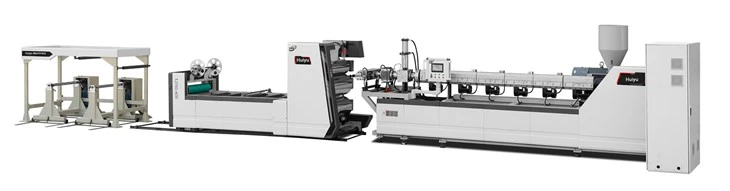
Before we dive into the details of maintaining uniform thickness, let's quickly go over how a sheet extruder works. A sheet extruder is a machine that melts plastic resin and then forces it through a die to create a continuous sheet of plastic. The process involves several key components, including an extruder screw, a barrel, a die, and a cooling system.
The extruder screw rotates inside the barrel, melting the plastic resin and pushing it forward. The molten plastic then passes through the die, which gives the sheet its shape and thickness. Finally, the sheet is cooled and solidified as it passes through a cooling system.
Factors Affecting Sheet Thickness
There are several factors that can affect the thickness of the sheet produced by a sheet extruder. Understanding these factors is crucial for ensuring uniform thickness. Here are some of the most important ones:
1. Extrusion Speed
The speed at which the extruder screw rotates can have a significant impact on the thickness of the sheet. If the extrusion speed is too high, the plastic may not have enough time to fully melt and flow evenly through the die, resulting in a non-uniform thickness. On the other hand, if the extrusion speed is too low, the plastic may cool too much before it reaches the die, also leading to thickness variations.
2. Temperature
Maintaining the right temperature is essential for achieving uniform thickness. The temperature of the barrel, the die, and the cooling system all need to be carefully controlled. If the temperature is too high, the plastic may become too fluid and flow unevenly, causing thickness variations. If the temperature is too low, the plastic may not melt properly, resulting in a rough or uneven surface.
3. Die Design
The design of the die plays a crucial role in determining the thickness of the sheet. A well-designed die will ensure that the plastic flows evenly through the die and that the sheet has a uniform thickness. The die should be properly sized and shaped to match the desired thickness and width of the sheet.
4. Plastic Resin Properties
The properties of the plastic resin used in the extrusion process can also affect the thickness of the sheet. Different types of plastic resins have different melting points, viscosities, and flow characteristics. It's important to choose the right plastic resin for your application and to ensure that it is properly dried and preheated before use.
Tips for Ensuring Uniform Thickness
Now that we've discussed the factors that can affect sheet thickness, let's look at some tips for ensuring uniform thickness in your sheet extrusion process.
1. Calibrate Your Equipment Regularly
Regular calibration of your sheet extruder is essential for maintaining uniform thickness. This includes calibrating the extrusion speed, the temperature, and the die. You should also check the alignment of the extruder screw and the die to ensure that they are properly centered.
2. Use a Thickness Gauge
A thickness gauge is a simple but effective tool for measuring the thickness of the sheet. You should use a thickness gauge regularly to check the thickness of the sheet at different points along its length and width. This will help you identify any thickness variations and make adjustments to the extrusion process as needed.

3. Monitor the Extrusion Process
Monitoring the extrusion process is crucial for ensuring uniform thickness. You should keep an eye on the extrusion speed, the temperature, and the pressure of the plastic resin. Any sudden changes in these parameters could indicate a problem with the extrusion process and may result in thickness variations.
4. Optimize the Die Design
As mentioned earlier, the design of the die plays a crucial role in determining the thickness of the sheet. You should work with a professional die designer to optimize the die design for your specific application. The die should be designed to ensure that the plastic flows evenly through the die and that the sheet has a uniform thickness.
5. Choose the Right Plastic Resin
Choosing the right plastic resin is essential for achieving uniform thickness. You should select a plastic resin that has the right melting point, viscosity, and flow characteristics for your application. You should also ensure that the plastic resin is properly dried and preheated before use.
Our Sheet Extruder Solutions
At our company, we offer a range of high-quality Plastic Sheet Extrusion Line and Plastic Sheet Extrusion Machine that are designed to ensure uniform thickness in your sheet extrusion process. Our Automatic High-Precision Sheet Extrusion Machine is equipped with advanced control systems and sensors that allow you to monitor and adjust the extrusion process in real-time, ensuring consistent and uniform thickness.
Our sheet extruders are also designed with easy-to-use interfaces and intuitive controls, making them suitable for both experienced operators and beginners. We also offer comprehensive after-sales support and training to help you get the most out of your sheet extruder.
Contact Us for a Quote
If you're looking for a reliable and high-quality sheet extruder to ensure uniform thickness in your sheet extrusion process, look no further. Contact us today to discuss your requirements and get a quote. Our team of experts will be happy to help you find the right sheet extruder solution for your business.
References
- "Plastics Extrusion Technology Handbook" by Allan A. Griff
- "Extrusion: The Definitive Processing Guide and Handbook" by Christopher Rauwendaal


