

Hey there! As a supplier of sheet extruders, I know firsthand how crucial it is to maintain the right pressure in these machines. Whether you're working with a Plastic Sheet Extruder, a Plastic Sheet Extrusion Machine, or a PLA Thermoforming Sheet Extruder, getting the pressure just right can make all the difference in the quality of your end product. In this blog post, I'll share some tips on how to adjust the pressure in a sheet extruder.
Understanding the Basics of Pressure in a Sheet Extruder
Before we dive into the adjustment process, let's quickly go over what pressure means in the context of a sheet extruder. Pressure in an extruder is essentially the force that pushes the molten plastic through the die to form a sheet. There are different types of pressure involved, like the melt pressure, which is the pressure of the plastic inside the barrel, and the die pressure, which is the pressure at the die opening.
The right pressure is super important. If the pressure is too low, you might end up with a sheet that has uneven thickness, poor surface finish, or even holes. On the other hand, if the pressure is too high, it can cause excessive wear and tear on the machine, and it might also lead to problems like die lines or even breakage of the plastic sheet.
Factors Affecting Pressure in a Sheet Extruder
Several things can affect the pressure in a sheet extruder. One of the main factors is the screw speed. The screw in the extruder is responsible for pushing the plastic forward. If you increase the screw speed, more plastic will be forced through the barrel, which generally increases the pressure. But it's not always a straightforward relationship. Sometimes, increasing the screw speed too much can cause the plastic to overheat and become less viscous, which might actually decrease the pressure in some cases.
The temperature of the plastic also plays a big role. When the plastic is heated to a higher temperature, it becomes more fluid and easier to flow. This usually means lower pressure is needed to push it through the die. Conversely, if the temperature is too low, the plastic will be more viscous, and you'll need more pressure to get it moving.
The type of plastic you're using is another key factor. Different plastics have different flow properties. For example, some plastics are more rigid and require higher pressure to extrude, while others are more flexible and can be extruded at lower pressures.
How to Adjust the Pressure
Now, let's get into the nitty - gritty of how to adjust the pressure.
Adjusting the Screw Speed
As I mentioned earlier, the screw speed has a direct impact on the pressure. To increase the pressure, you can start by increasing the screw speed gradually. But make sure to monitor the melt temperature at the same time. You can use a temperature sensor to keep an eye on it. If the temperature starts to rise too much, you might need to slow down the screw speed a bit or adjust the heating zones.
To decrease the pressure, you can do the opposite and reduce the screw speed. However, be careful not to reduce it too much, as this can lead to inconsistent flow and uneven sheet thickness.
Controlling the Temperature
Adjusting the temperature is another effective way to control the pressure. If you need to increase the pressure, you can lower the temperature of the plastic in the barrel. This will make the plastic more viscous, and it will require more force to push it through the die. You can do this by reducing the heat input to the heating zones.
If you want to decrease the pressure, raise the temperature. But again, don't go overboard. Each type of plastic has an optimal temperature range for extrusion, and going outside of this range can cause all sorts of problems, like degradation of the plastic.

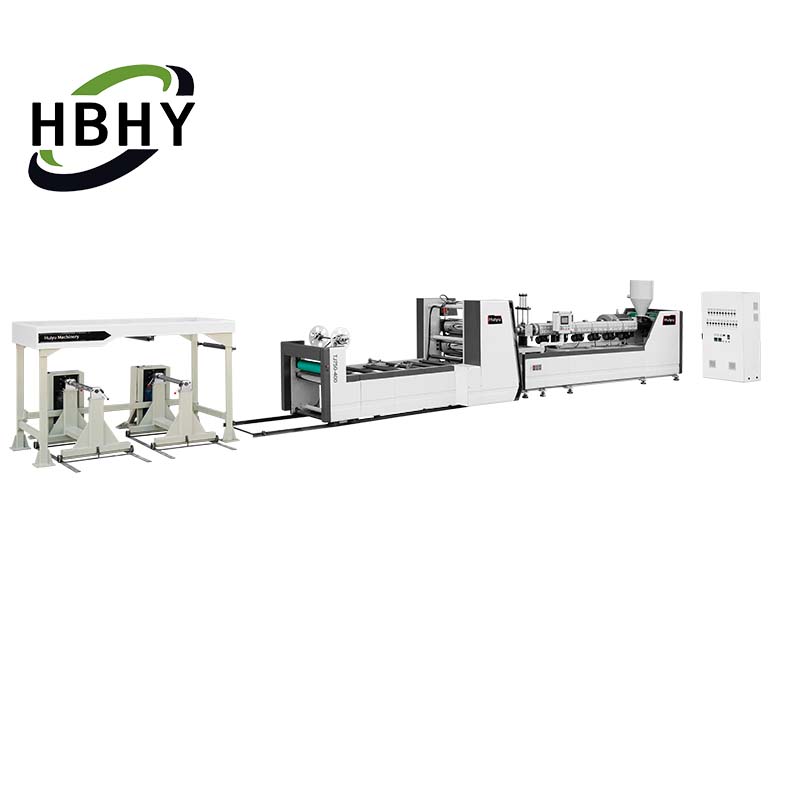
Changing the Die Opening
The size and shape of the die opening can also affect the pressure. A smaller die opening will generally increase the pressure because the plastic has to be forced through a smaller space. If you need to increase the pressure, you can consider using a die with a smaller opening.
Conversely, if the pressure is too high, you can try using a die with a larger opening. This will allow the plastic to flow more easily and reduce the pressure.
Monitoring the Pressure
Once you've made adjustments, it's crucial to monitor the pressure continuously. Most modern sheet extruders come with pressure sensors that can give you real - time readings. You can use these readings to fine - tune your adjustments.
If you notice that the pressure is fluctuating a lot, it could be a sign of a problem. Maybe there's an issue with the screw, or the plastic is not flowing evenly. In such cases, you might need to stop the machine and check for blockages or other mechanical problems.
Troubleshooting Pressure Issues
Sometimes, even after making adjustments, you might still face pressure problems. Here are some common issues and how to deal with them.
High Pressure with Low Screw Speed
If you're getting high pressure even when the screw speed is low, it could be due to a blockage in the barrel or the die. Check for any foreign objects or hardened plastic that might be blocking the flow. You can try cleaning the barrel and the die using appropriate cleaning tools.
Low Pressure with High Screw Speed
If the pressure is low despite a high screw speed, it could be that the plastic is overheating and becoming too fluid. Reduce the temperature in the heating zones and see if that helps. It could also be a sign of a worn - out screw. If the screw has too much wear, it might not be able to push the plastic effectively, resulting in low pressure.
Why Choosing the Right Supplier Matters
As a sheet extruder supplier, I can tell you that having a reliable machine is half the battle. Our Plastic Sheet Extruder, Plastic Sheet Extrusion Machine, and PLA Thermoforming Sheet Extruder are designed with advanced features to make pressure adjustment as easy as possible. We use high - quality materials and precision engineering to ensure that our machines can handle different types of plastics and produce high - quality sheets consistently.
If you're in the market for a sheet extruder or if you're having trouble with pressure adjustment on your current machine, don't hesitate to reach out. We're here to help you get the most out of your extrusion process. Whether you need advice on pressure adjustment or are looking to upgrade your equipment, we've got you covered.
Conclusion
Adjusting the pressure in a sheet extruder is a delicate balance. It requires a good understanding of the factors that affect pressure, like screw speed, temperature, and die opening. By making careful adjustments and continuously monitoring the pressure, you can ensure that your sheet extruder produces high - quality plastic sheets every time.
If you're interested in learning more about our sheet extruders or if you have any questions about pressure adjustment, feel free to contact us. We're always happy to have a chat and help you with your extrusion needs.
References
- "Plastics Extrusion Technology Handbook" by Allan A. Griff
- "Extrusion: The Definitive Processing Guide and Handbook" by Christopher Rauwendaal


